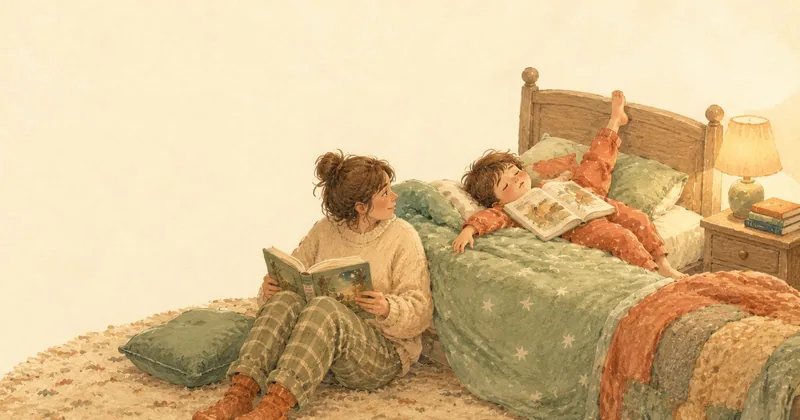
The bedtime story is supposed to be the calm part. In a lot of houses it is the part where everything comes apart: one more book, a different book, the book that is somewhere under the sofa. By the time the lamp goes off, nobody has enjoyed anything.
If reading has quietly turned into a bargaining chip, the fix is usually not more firmness. It is taking the book out of the negotiation.
1. Move the story out of bedtime
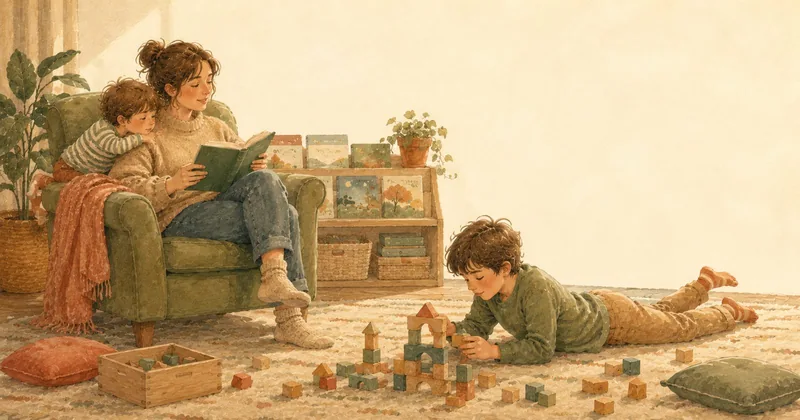
The simplest change, and the one almost nobody tries. Read after dinner, in the living room, with the lights still on. A story that is not the last gate before sleep stops being worth fighting over, and a tired child at 7:45 is a much better audience than the same child at 8:20.
2. Say the number out loud before you start
“Two books tonight.” Said once, before the first cover opens, while everyone is still calm. The negotiation happens because the number was never stated, so every book becomes a fresh question. Name it early and you are reminding rather than refusing.
3. They pick one, you pick one
This ends the twenty minute shelf audit, and it quietly protects your own sanity, because you get to choose something you can stand. It also slips in books they would never have chosen, which is how a child’s taste actually widens.
4. Get quieter, not shorter
Most adults speed up when they want a story to end. Children hear urgency and get more wound up. Try the opposite: same pace, half the volume, fewer voices as you go. A read-aloud that fades is doing part of the work of getting them to sleep.
5. Keep a small shelf of night books
Six or eight titles that live by the bed and are not read at any other time of day. Nothing loud, nothing with flaps. The books themselves become part of the signal that the day is closing, which is a lot more effective than telling a four year old to settle down.
If you need candidates, the weekly book list is a reasonable place to steal from.
6. Stop performing when they stall
When the stalling starts, do not argue and do not stop reading. Just drain the energy out of it. Keep reading in a flat, gentle voice. Stalling is only worth doing when it produces a reaction, and a story with no reaction in it is not much of a prize.
7. Stop one page early
End while they still want more. It feels wrong and it works.
A book that ends slightly too soon gets asked for again tomorrow. A book that runs until everyone is worn out gets avoided.
8. Some nights, skip it
If the evening has already gone sideways, reading a book through gritted teeth teaches your child something about books that you do not want them to learn. Turn the light off, say the story is waiting for tomorrow, and mean it. One skipped night costs you nothing. Twenty nights of forcing it costs you the habit.
If they are already reading on their own and the evening has turned into a negotiation about lights out instead, the read-aloud is still worth protecting.
Try this week: move the story to right after dinner for three nights running. Do not change anything else. Most families can tell within three days whether bedtime was the problem or the book was.